Newsletter Volume 6 Issue 1
 In this issue:
- Emerging Magnetic Cooling Technology
- The Correct Way to Use Heat Exchangers
- Choosing an Air Conditioner for Your Application
- New Progressive Air Conditioners
Featured video: Solid State Magnetic Cooling
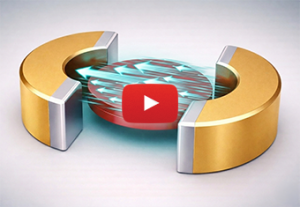 See Solid State Magnetic Cooling Video

Emerging Magnetic Cooling Technology
This emerging technology is called magnetocaloric or solid-state cooling. It works completely differently than existing cooling technology that uses a compressor to compress a refrigerant (thus taking it to high pressure and high temperature), and pushes it through the condenser, where it is cooled by ambient air thus passing from the gas to the liquid state. At the liquid state it then passes through the expansion device being a much lower pressure the refrigerant arrives to the evaporator where it absorbs the necessary heat to change from liquid to gas state. The gas is then drawn back into the compressor completing the cycle.
Magnetocaloric cooling uses an element like gadolinium (Gd, 64) or a mineral called atacamite combined with a magnet that is moved in and out of close proximity a cooling effect is created by aligning and un-aligning molecules. A magnetic field creates an alignment of the molecules that reduces the entropy of the element or mineral which releases heat. When the magnet is withdrawn, entropy increases and heat is absorbed from the area around the element or mineral.
This process is being tuned by at least one major appliance manufacturer that plans to release refrigeration products based on this technology in 2028.
Sources:
1. https://phys.org/news/2026-02-cooling-gases-molecular-solid-state.html
2. The Forge Empire https://www.youtube.com/watch?v=Yx2i0i6dxT4

The Correct Way to Use Heat Exchangers
 |
|---|
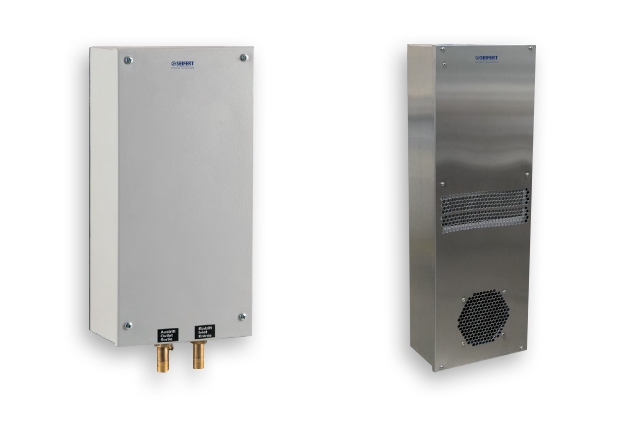
Air / air heat exchangers are used when cool ambient air is available but should not enter the control enclosure because of contamination. Air/air heat exchangers are mainly used in outdoor applications.
Air / water heat exchangers are mainly used when water cooling systems are available or if high power losses in small areas need to be handled.
In both cases the enclosure temperature is higher than the ambient air or cooling water.

Choosing an Air Conditioner for Your Application
In the last three issues of Cool Cab News we covered an overview of what information is needed to determine the cooling capacity needed for each enclosure application and the type of cooling equipment best suited for those applications in Part I. And in Part II we detailed the first steps in determining your application's required cooling capacity–choosing your enclosure's parameters. In Part III we covered the last basic steps to determine cooling capacity needed for your application including choosing parameters specific to your application's orientation and temperature parameters. and location type: indoor, outdoor, 19 inch rack mounted or NEMA 4X housing and more.
In this issue we cover other factors not associated with calculating cooling capacity needed. See our previous three issues for that.
Once you have determined the air conditioner cooling capacity needed for your application, other possible factors that can be considered include selecting the UL type—3R, 4, 12, 4x. One more factor is deciding whether or not you need a filter for your application. Once these are all considered, virtually all relevant factors in choosing your air conditioner are covered.

New Progressive Air Conditioners
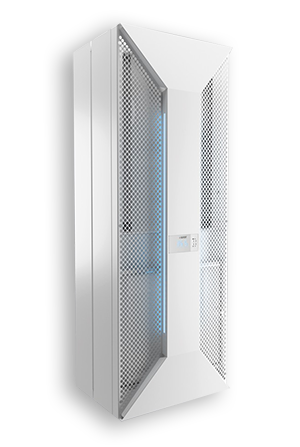
New! Slimline NEO Series
Advanced Enclosure Air Conditioners
The Slimline NEO Series is uniquely designed with these features:
• Energy efficiency ratio up to 3.6
• RAL 7035 power coated steel or 304 stainless steel housing
• Cooling capacity: from 1,000 to 8,530 BTU/hr
• R290/0.02 refrigerant
• Digital programmable controller
• Operating temperature range 50°F to 140°F
Learn more about Slimline NEO models here.
If you have a question about enclosure cooling for your specific application, Seifert Systems' technical staff would be glad to speak with you. Email us at info.us@seifertsystems.com or call 401-294-6960 .
Please email suggestions for technical subjects you would like to suggest for this newsletter to this link: Newsletter Editor